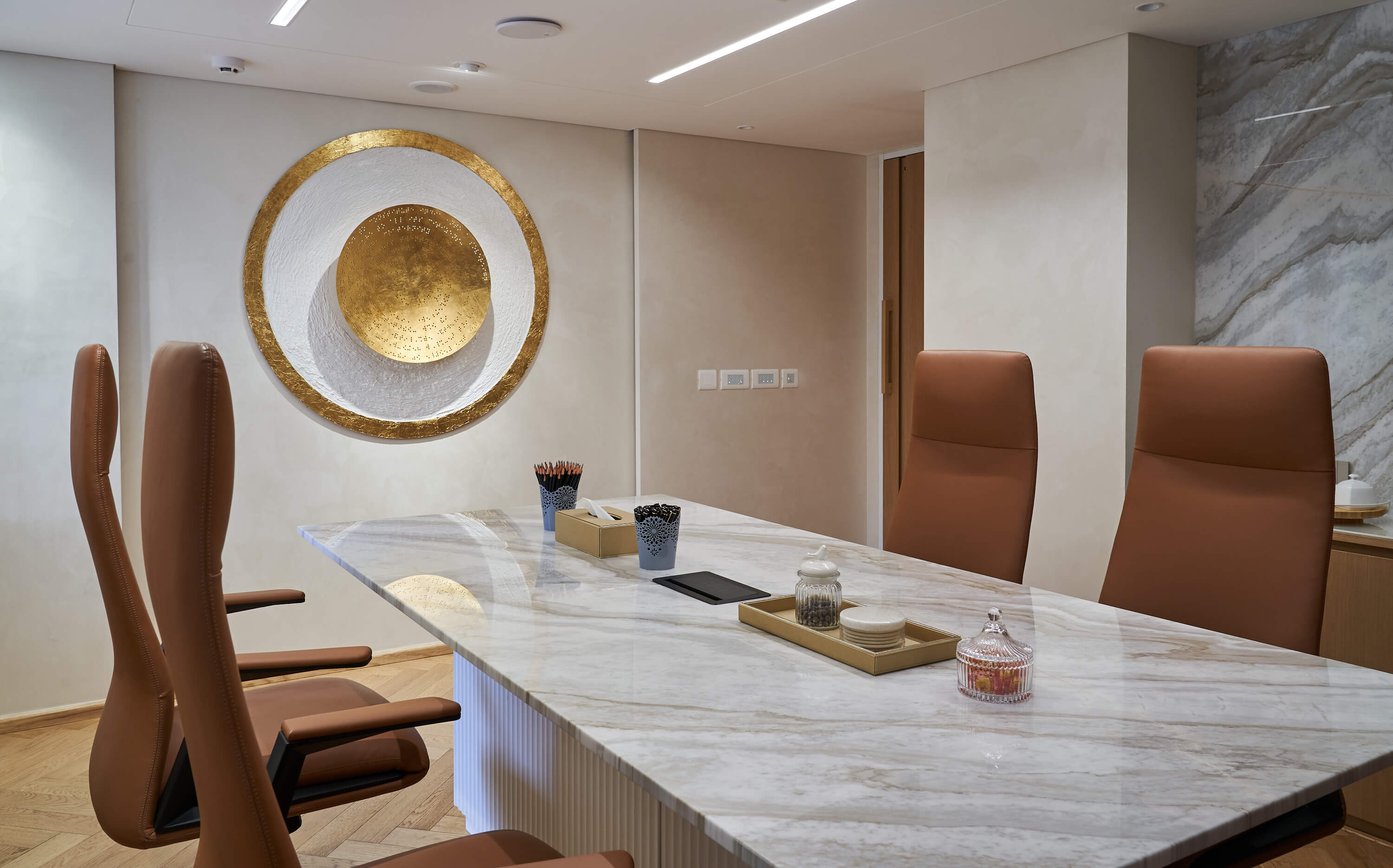
Art in commercial spaces is rarely accidental or at least it shouldn’t be. It’s not something you “add later when the budget allows.” When integrated thoughtfully, art can become spatial punctuation that anchors, provokes and elevates.
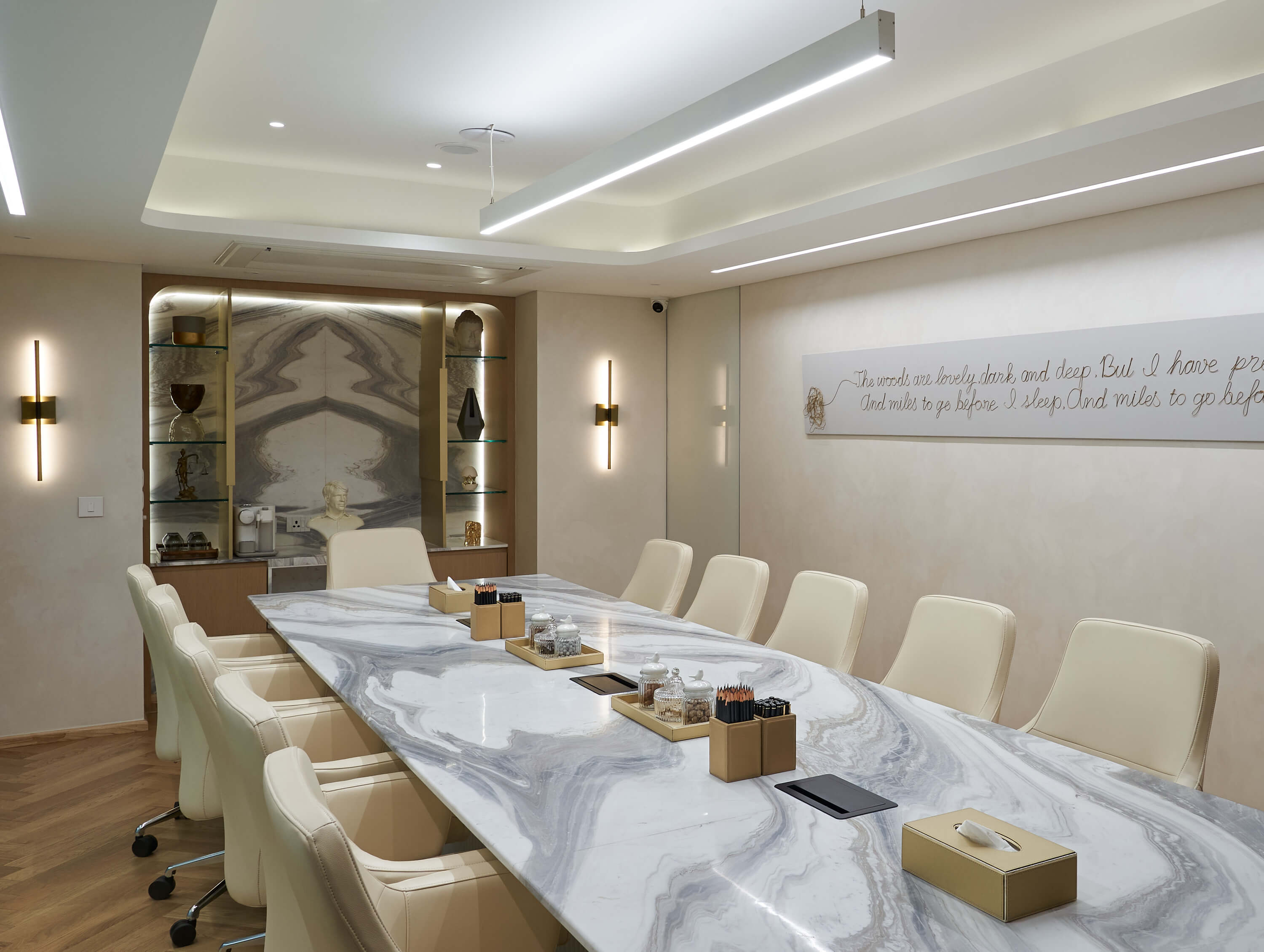
Conference room featuring poetry converted into wall art.
When the Client Has a Collection (and It Deserves Better Than Storage)
Many clients come to us with a collection built over years and sometimes decades. These pieces often carry emotional, historical, or brand significance and deserve more than incidental wall space.
That's why designing around an existing collection means thinking about:
Wall proportions and scale
Viewing distances
Circulation patterns
Lighting direction and intensity
A long passageway allows art to unfold sequentially, almost like a curated exhibition rather than decorative placement. Corridors, for instance, are often overlooked and yet they make exceptional gallery spaces.
Boardrooms, on the other hand, are ideal for large or panoramic works. The key here is restraint - the architecture should support the art and not compete with it.
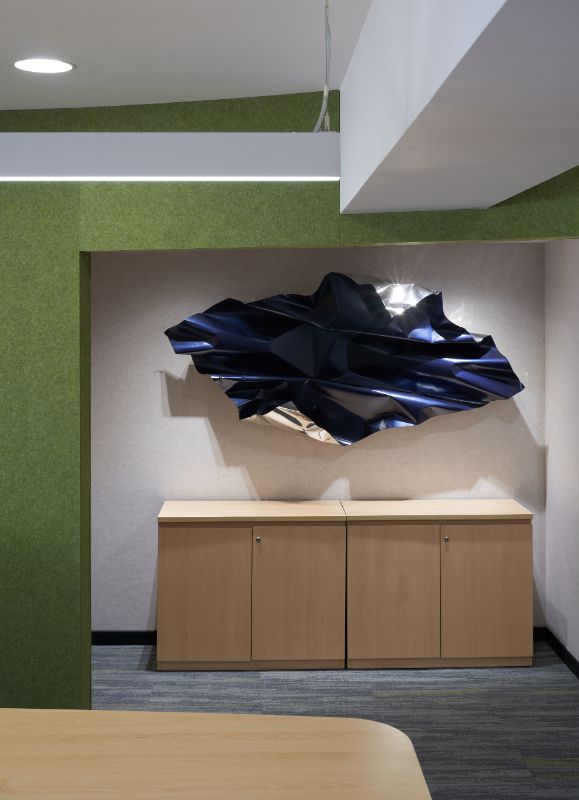
Statement art can lift the mood of a serious boardroom.
Commissioning Art (When Context Matters)
Sometimes, the space demands something that doesn’t already exist.
Commissioned artwork allows the narrative to be precise in scale, content, and materiality. This is particularly powerful in hospitality environments, corporate headquarters, or leadership spaces where identity needs to be unmistakable.
Custom work allows alignment with:
Brand philosophy
Spatial proportions
Cultural context
The material palette of the project
Emerging artists often bring an unexpected edge and yes, they’re usually more flexible and budget-friendly than blue-chip galleries. A good collaboration produces art that feels inseparable from the architecture.
Acquiring Art During Design & Execution
Of course, not all art needs to be predetermined. Some of the strongest pieces are sourced once the spatial framework is in place. By this stage, the lighting is clearer, the material palette is defined and the energy of the space is tangible making art selection intuitive rather than theoretical.
Black and white photography, for instance, is often underestimated as it can be elegant, versatile and significantly more accessible financially without feeling compromised.
We find that framed poetry or typography can also function as alternative art. When thoughtfully composed, words become visual anchors humanising a corporate environment without making it sentimental.
Practical Considerations (That Matter More Than You Think)
Designing for art isn’t just about aesthetics.
Sunlight fades colour.
If artwork is near windows, translucent blinds or UV protection are non-negotiable.
Art rails offer flexibility.
They allow rotation without puncturing walls every time the collection evolves.
Accessibility is powerful.
For instance, incorporating Braille alongside text can be used to make a space inclusive. And visually, it can be unexpectedly beautiful.
Ultimately, art in commercial spaces tells visitors who you are before a single conversation begins. It can signal confidence, creativity or discretion or all three.